Approach
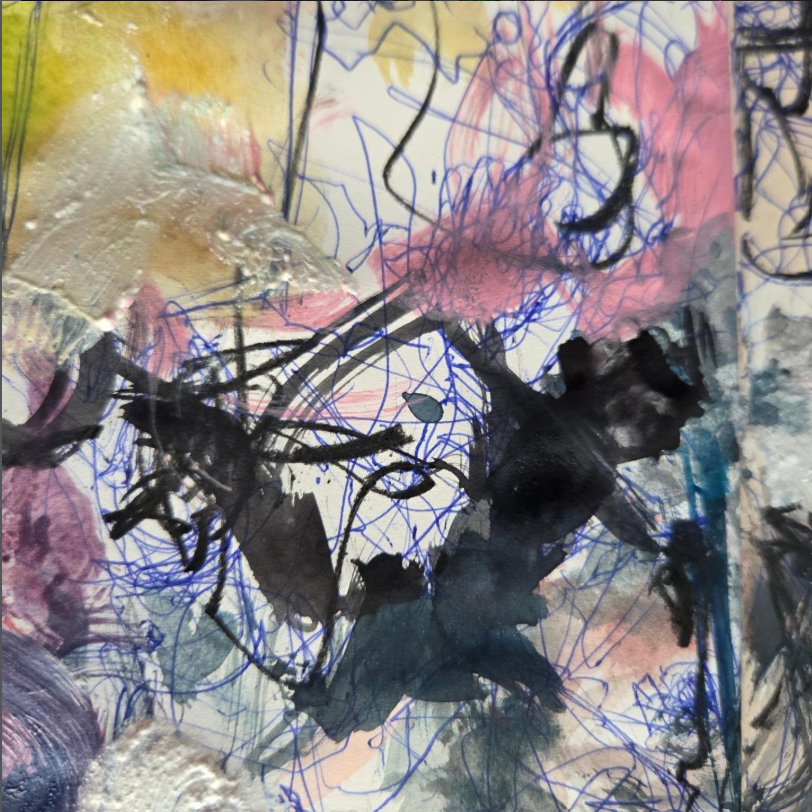
The work is a powerful example of abstract expressionism and mixed-media. The works are characterized by a layered structure in which different techniques and emotions come together.
Visual Analysis & Features
Energetic Lineature: The most striking elements in Eric De Becker's work are the chaotic, criss-crossing scribbles and lines. These are applied with pen, ink or pencil and give the work a raw, restless dynamic.
Use of colour: there is a strong contrast between the soft, almost neutral background colours (such as pastel pink, beige and soft yellow) and the bright, emotional notes in fuchsia, deep black and dark blue.
Texture and Layering: Eric De Becker's works are made up of several layers. Underneath the fine lines are coarser brushstrokes of acrylic or oil paint. In some places, the paint is applied thicker (impasto), which creates a tangible three-dimensional texture on the surface.
Style and Inspiration: the style balances on the border of intuitive painting. It is strongly reminiscent of the work of iconic artists such as Cy Twombly (known for his poetic, handwriting-like scribbles) or the frenetic, layered compositions of Joan Mitchell and Cecily Brown. During the process, the artist responds directly to the impulses of the moment, so that the act of making itself (action painting) is central.